Rated 5 out of 5.Verified purchase
Second order of BPC-157 10mg. Same as the first, next day to Sydney, clean sealed vials, batch matched the published Janoshik report. Set and forget.
Shipping 5/5Would recommend
Free shipping Australia-wide on orders over $100
Free shipping over $100 · same-day dispatch before 12pm AEST · Australia only.
Supplied strictly for in-vitro / laboratory research use only. Not for human or animal consumption. You confirm you are 18+ and purchasing for research purposes.
BPC-157 Australia. BPC-157 is the benchmark repair peptide and the most cited compound in the category. The research splits in two. On the repair side it reports faster healing and better strength recovery in tendon, ligament and muscle, along with nerve regeneration and new blood vessels growing into damaged tissue. On the gut side, which is where the compound came from, it reports a more intact stomach and intestinal lining, ulcer healing, and improvement in inflammatory bowel models.
How it does it. BPC-157 is a short peptide of fifteen amino acids, taken from a protective protein found in gastric juice. It works through the nitric oxide system, which controls how blood vessels widen and how well blood reaches a site, and it raises VEGFR2, the receptor cells use to grow new blood vessels. Separate work links it to tendon cells spreading and migrating. Blood supply and cell movement are the two things tissue needs in order to rebuild itself.
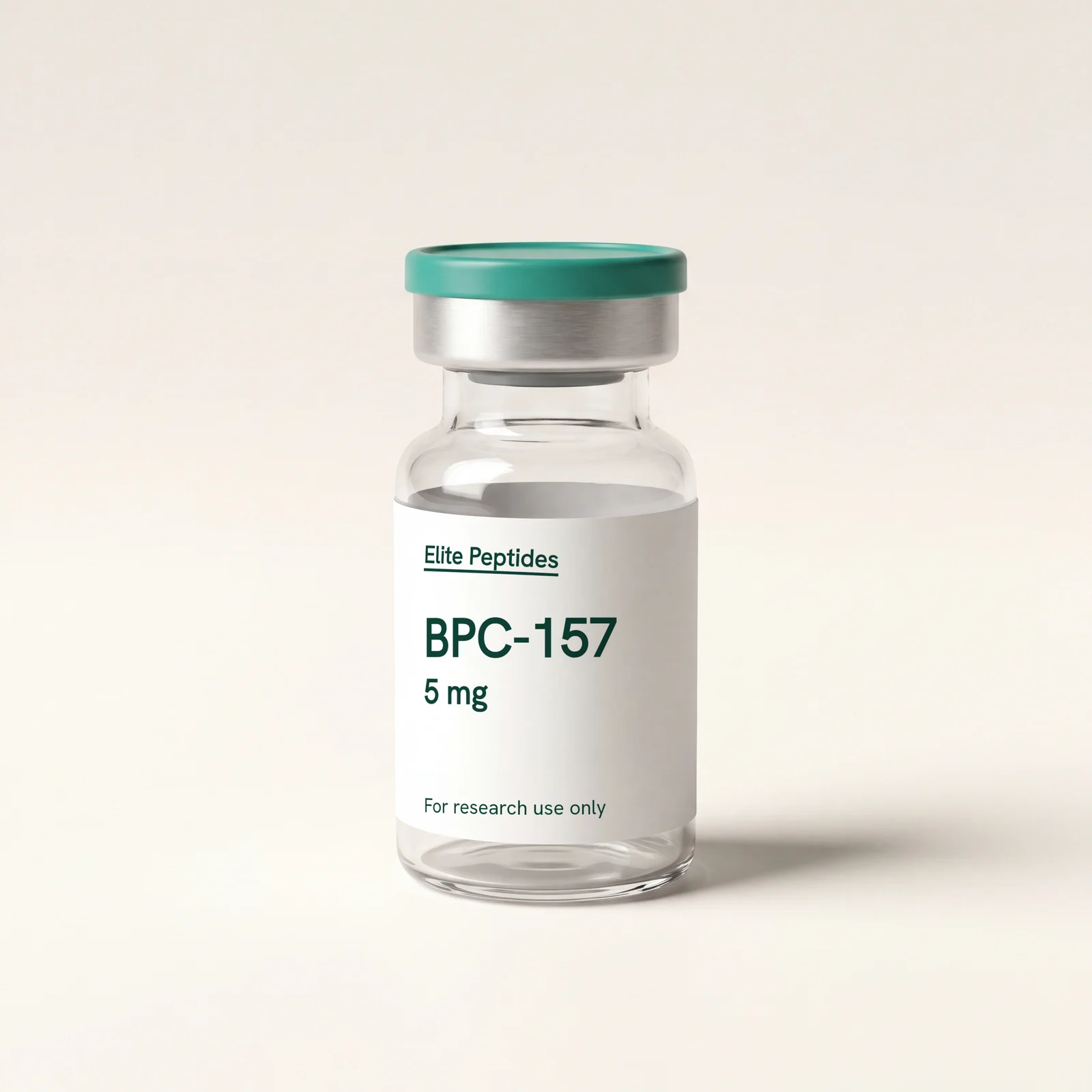
The vial. Independently HPLC-tested by Janoshik, with the certificate of analysis published on this page and in the lab-reports library. That is the measured number, not a marketing figure, and it carries a verifiable Janoshik key. Supplied in 5 mg and 10 mg freeze-dried vials, dispatched from Australia, AUD pricing. Supplied strictly for in-vitro and laboratory research use only. Not for human or animal consumption, not a therapeutic good, not TGA-approved.
Also written bpc157. BPC157 without the hyphen, bpc 157 peptide and bpc157 australia all name this same pentadecapeptide, Body Protective Compound 157. The 5 mg and 10 mg vials on this page are that compound either way, each with its own Janoshik certificate.
BPC-157 (CAS 137525-51-0; molecular formula C62H98N16O22, average molecular weight ≈ 1419 g/mol; sequence GEPPPGKPADDAGLV) is a 15-residue pentadecapeptide — Body Protective Compound-157 — a partial sequence derived from research on a stable gastric-juice protective protein. It is one of the most-studied compounds in the research-peptide literature, referenced across tendon and ligament cytoprotection, gastric-mucosal, angiogenic and broader soft-tissue-repair research.
Pathway research on BPC-157 is synthesised in the review by Seiwerth and colleagues (Frontiers in Pharmacology, 2021), which covers its reported interaction with the nitric-oxide system and its VEGFR2-associated angiogenic signalling. The pro-angiogenic mechanism — up-regulation and activation of the VEGFR2–Akt–eNOS axis — was reported by Hsieh and colleagues (Journal of Molecular Medicine, 2017).
In tendon-cell research, Chang and colleagues (Journal of Applied Physiology, 2011) linked BPC-157 to tendon-fibroblast outgrowth, survival and migration through the FAK–paxillin pathway. Together these give BPC-157 a well-described identity across the vascular, growth-factor and tissue-repair research strands.
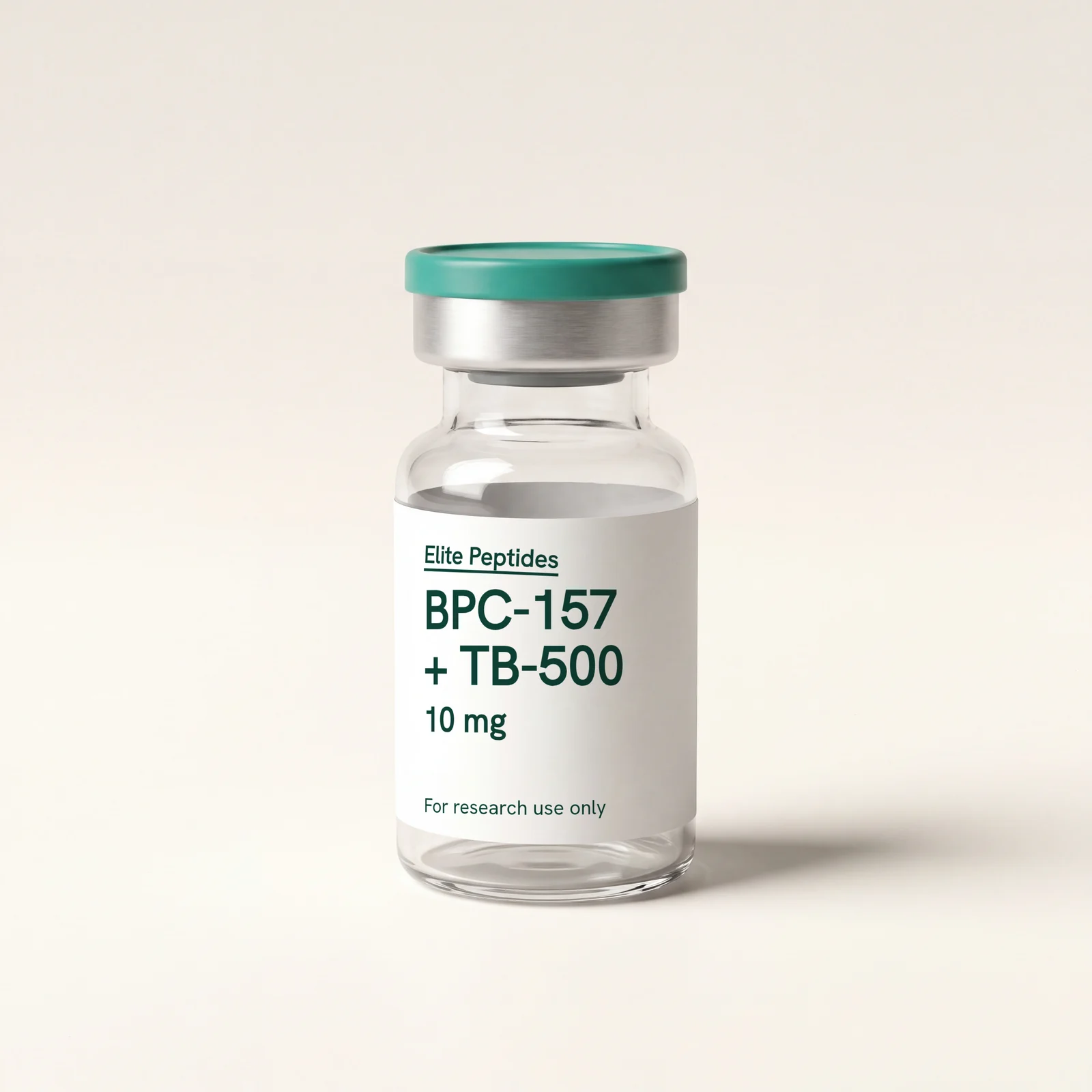
BPC-157 is most frequently referenced alongside TB-500 (thymosin β-4) in the canonical "soft-tissue" research stack — the two act on distinct pathways (growth-factor / nitric-oxide signalling versus actin dynamics) that converge on the tissue-repair research model. See the BPC-157 + TB-500 research blend product page for the co-lyophilised research-stack variant.
The information provided here is a research-reference summary only. Elite AU Peptides makes no medical, therapeutic, performance, or human-use claim about this product. BPC-157 is not TGA-approved, is not a therapeutic good, and is supplied strictly for in-vitro and laboratory research use only. Researchers should consult the primary peer-reviewed literature for pathway data and protocol-specific reference values.
Reconstitute the lyophilised BPC-157 vial with bacteriostatic water for laboratory handling. Add the diluent slowly down the vial wall and swirl gently rather than shaking. The required volume depends on the protocol’s downstream assay requirements — a 5 mg vial reconstituted in 2 mL of bacteriostatic water yields a 2.5 mg/mL working stock; a 10 mg vial reconstituted in 5 mL yields a 2 mg/mL working stock. Adjust per protocol.
Store the lyophilised powder at −20°C, desiccated and protected from light; once reconstituted, store refrigerated at 2–8°C and use within the documented research window, or aliquot and freeze to avoid repeated freeze-thaw cycles. Tamper-evident packaging; the batch label is the canonical reference for the certificate of analysis published in the lab-reports library.
Australia only. Free shipping over $100. Orders placed before 12pm AEST are dispatched the same business day from Australia.
30-day returns on unused product in original packaging, with prior approval.
[ Further reading ]
BPC-157 in Australia: a soft-tissue research guideWhat BPC-157 is — the 15-residue pentadecapeptide that is the category benchmark across tendon, ligament, gastric-tissue and angiogenesis research — how it is referenced alongside TB-500, and how research-grade material is HPLC-verified. A laboratory research reference for Australian researchers.
[ Certificate of analysis ]
— Independently HPLC-tested by Janoshik. Open the certificate to verify batch BP100923 for yourself.
Janoshik · HPLC
99.93%
measured purity · independently verified
[ Customer reviews ]
5.0
Average rating 5 out of 5, from 2 reviews
Second order of BPC-157 10mg. Same as the first, next day to Sydney, clean sealed vials, batch matched the published Janoshik report. Set and forget.
Ordered BPC-157 on a Tuesday night and it was at my door in Melbourne by Thursday morning. Vials came foam-packed and vacuum sealed, nothing rattling around. Checked the batch number against the lab report on the website and it matched. Couldn't ask for more from a domestic supplier.
[ Stacked with ]
[ Related products ]
Compare this against every other vial on the peptide prices page, browse healing & recovery, or see all 23 research peptides.
Elite AU Peptides supplies research peptides and related compounds for laboratory and in-vitro research use only. Products are not therapeutic goods, are not TGA-approved, and are not for human or animal consumption. Nothing on this site constitutes medical advice or a therapeutic claim. Purchasers must be 18 years or older and are responsible for complying with all applicable laws in their jurisdiction.