[ Melanocortin research ]
Melanotan 2 in Australia: a melanocortin-receptor research guide
What Melanotan II (MT-2) is, where it sits in melanocortin-receptor (MC1R–MC5R) research, and how research-grade material is verified — framed strictly as a laboratory research reference for Australian researchers.
8 min read · Updated 21 July 2026
[ Research use only · Not for human consumption ]
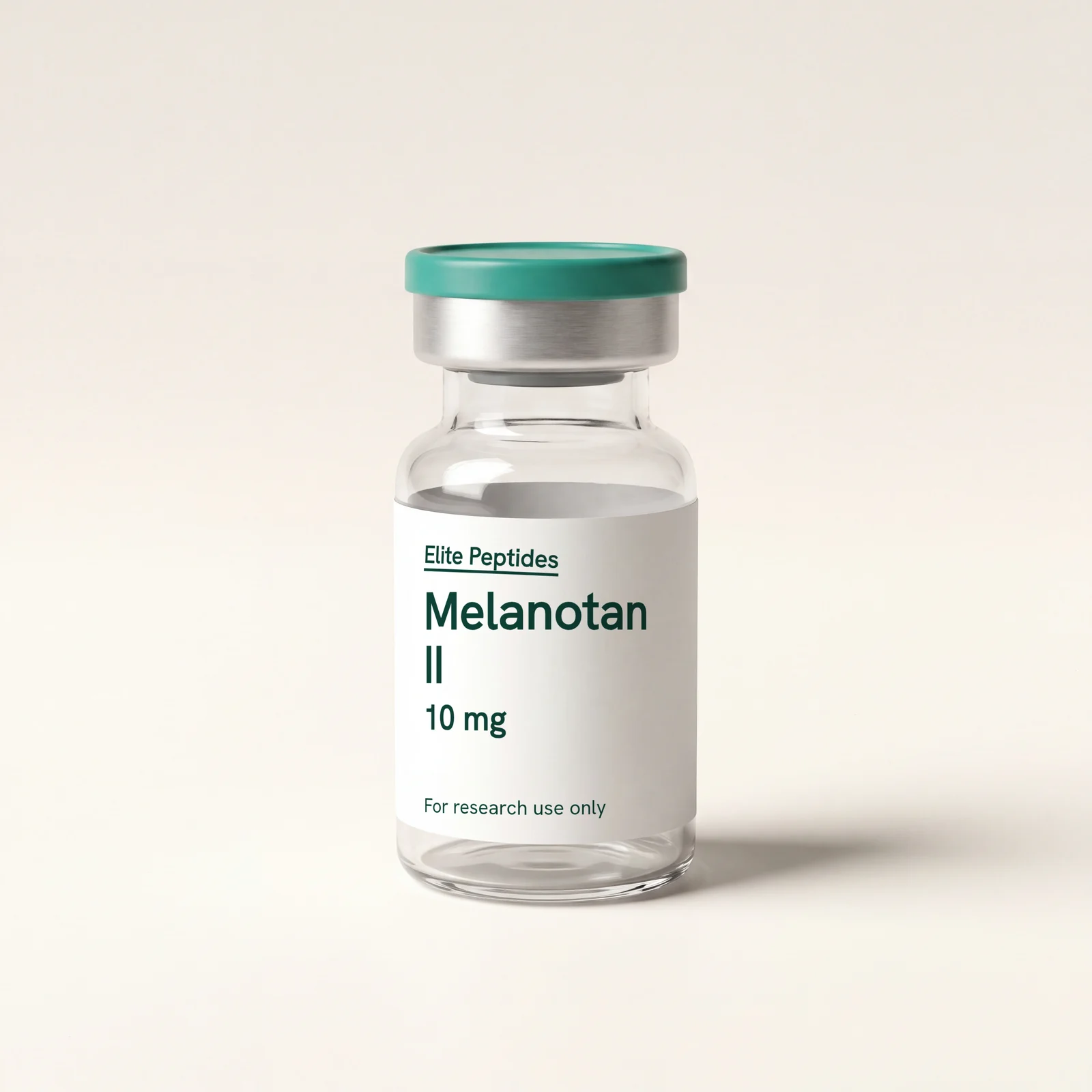
Melanotan 2 in Australia. Melanotan II (MT-2) is a synthetic cyclic analogue of α-melanocyte-stimulating hormone (α-MSH) referenced across the melanocortin-receptor research literature. It is studied in vitro as a research tool for probing the melanocortin system — the family of five G-protein- coupled receptors (MC1R through MC5R) through which the endogenous melanocortin peptides signal. This guide is a research-reference summary for Australian researchers: what the compound is, where it sits in the literature, and how research-grade material is verified. It makes no medical, cosmetic, or human-use claim.
The melanocortin system in research
The melanocortin receptors are a family of five class-A GPCRs — MC1R, MC2R, MC3R, MC4R and MC5R — that respond to the melanocortin peptides derived from pro-opiomelanocortin (POMC), including α-MSH. Each receptor has a distinct research profile: MC1R is studied in melanocyte and pigment-cell biology research, MC2R in adrenal-signalling research, and MC3R/MC4R in central melanocortin-pathway research. Because the endogenous agonists are short-lived, stabilised synthetic analogues such as Melanotan II are used as research tools to interrogate melanocortin-receptor pharmacology in controlled laboratory models.
Where Melanotan II sits in the literature
Melanotan II is referenced as a broad, non-selective melanocortin-receptor agonist — active across MC1R, MC3R, MC4R and MC5R in research models. Structurally it is a cyclic lactam heptapeptide analogue of the α-MSH core sequence, engineered for greater in-vitro stability than the native hormone. That broad receptor activity is precisely why it is studied as a reference agonist when researchers characterise melanocortin- receptor signalling, compare receptor subtype responses, or benchmark newer, more subtype-selective analogues against a known wide-spectrum tool compound.
It is most usefully understood alongside its more selective counterpart. Where Melanotan II is broad- spectrum, PT-141 (bremelanotide) — a metabolite in the same structural family — is studied as a more MC4R-focused agonist. Researchers comparing melanocortin-subtype behaviour frequently reference the two together; see the PT-141 product page for the MC4R-focused research compound.
Identity, purity and the COA moat
In research peptides, the compound is only as useful as its verified identity and purity — a mislabelled or impure vial invalidates the work. Every batch of Melanotan II supplied by Elite AU Peptides is independently HPLC-tested by Janoshik before it is listed. The measured purity is published on the Melanotan II product page and in the lab-reports library — a real batch number, the measured percentage rather than a marketing figure, and a report you can verify independently at janoshik.com. Nothing is listed without a certificate on file.
Reconstitution and handling for research use
Melanotan II ships as a lyophilised (freeze-dried) powder. For laboratory handling it is reconstituted with bacteriostatic water; the volume depends on the working concentration a given protocol requires. Store the lyophilised powder at −20°C; once reconstituted, refrigerate at 2–8°C and use within the documented research window. The batch label is the canonical reference for the certificate of analysis in the lab-reports library, so keep vials in their tamper-evident packaging until use and record batch numbers in your protocol notes.
Compliance and research-use framing
Melanotan II is not TGA-approved, is not a therapeutic good, and is not a cosmetic product. Elite AU Peptides supplies it strictly for in-vitro and laboratory research use only — not for human or animal consumption. We make no medical, cosmetic, or human-use claim about this compound; the material above is a research-reference summary of the published melanocortin-receptor literature, not guidance for any use. Researchers should consult primary peer-reviewed sources for receptor-binding affinities, assay conditions, and protocol- specific reference values, and are responsible for the regulatory and institutional requirements that apply to their work.
[ Frequently asked ]
Melanocortin research — questions researchers ask.
- What is Melanotan 2?
- Melanotan II (MT-2) is a synthetic cyclic analogue of α-melanocyte-stimulating hormone (α-MSH) referenced across melanocortin-receptor research literature. It is studied as a non-selective agonist at the melanocortin receptors (MC1R–MC5R). Elite AU Peptides supplies it strictly for in-vitro and laboratory research use only — not for human or animal consumption, not a therapeutic good, and not TGA-approved.
- Is Melanotan 2 legal or TGA-approved in Australia?
- Melanotan II is not TGA-approved and is not a therapeutic good in Australia. The material listed here is supplied strictly for in-vitro laboratory research use only, with no medical, cosmetic, or human-use claim. Researchers are responsible for compliance with the institutional and regulatory requirements that apply to their work.
- What receptors does Melanotan 2 act on in research models?
- Melanotan II is referenced in the literature as a broad melanocortin-receptor agonist — binding across MC1R, MC3R, MC4R and MC5R in research models, in contrast to the more MC4R-focused analogue PT-141 (bremelanotide). Its melanocortin-receptor pharmacology is why it is studied as a research tool for probing the melanocortin system.
- How is research-grade Melanotan 2 tested?
- Every batch of Melanotan II is independently HPLC-tested by Janoshik Analytical before it is listed. The measured purity is published on the product page and in the lab-reports library — a real batch number, the measured percentage, and an independently verifiable Janoshik report; nothing is listed without a certificate on file.
- How is Melanotan 2 reconstituted and stored for research use?
- The lyophilised vial is reconstituted with bacteriostatic water for laboratory handling; the volume depends on the working concentration a protocol requires. Store the lyophilised powder at −20°C and, once reconstituted, refrigerate at 2–8°C and use within the documented research window. Consult primary literature for protocol-specific reference values.
- How is Melanotan 2 different from PT-141?
- Both are melanocortin-system research peptides, but they differ in receptor selectivity: Melanotan II is referenced as a broad MC1R–MC5R agonist, while PT-141 (bremelanotide) is a metabolite studied as a more MC4R-focused agonist. See the PT-141 product page for the MC4R-focused research compound.
- How is Melanotan 2 shipped in Australia?
- Stock is held and dispatched AU-domestic — no inbound customs handling. Free shipping over $100; orders placed before 12pm AEST are dispatched the same business day. Supplied strictly for laboratory research use only.
[ Referenced in this guide ]
Shop the compounds
- Melanotan II (MT-2) — 10mgThe research-grade vial this guide references — independently HPLC-tested, COA on file.
- PT-141 (Bremelanotide) — 10mgThe other melanocortin-pathway research peptide in the catalogue (MC4R-focused).
- Bacteriostatic water — 3ml / 10mlThe standard reconstitution diluent referenced across peptide research methodology.
Comparing suppliers? Peptide prices in Australia lists what every compound and vial size costs in AUD, read live from the catalogue, next to the batch certificate for each one.
[ Keep reading ]
More research guides
- PT-141 melanocortin (MC4R) research guideThe closely related MC4R-focused melanocortin research peptide on the same lactam scaffold.
- GHK-Cu copper-peptide research guideThe most-researched copper-peptide research compound — the sibling skin-research guide.
- Aesthetics & Lifestyle research peptidesThe catalogue category Melanotan II is filed under.
- All research guidesBrowse every research-use guide in the library.
Elite AU Peptides supplies research peptides and related compounds for laboratory and in-vitro research use only. Products are not therapeutic goods, are not TGA-approved, and are not for human or animal consumption. Nothing on this site constitutes medical advice or a therapeutic claim. Purchasers must be 18 years or older and are responsible for complying with all applicable laws in their jurisdiction.