[ Nootropic research ]
Semax in Australia: a pro-cognitive nootropic research guide
What Semax is — a stabilised ACTH(4-10) analogue referenced across BDNF and neurotrophic research — how it pairs with Selank, and how research-grade material is HPLC-verified. A laboratory research reference for Australian researchers.
7 min read · Updated 22 July 2026
[ Research use only · Not for human consumption ]
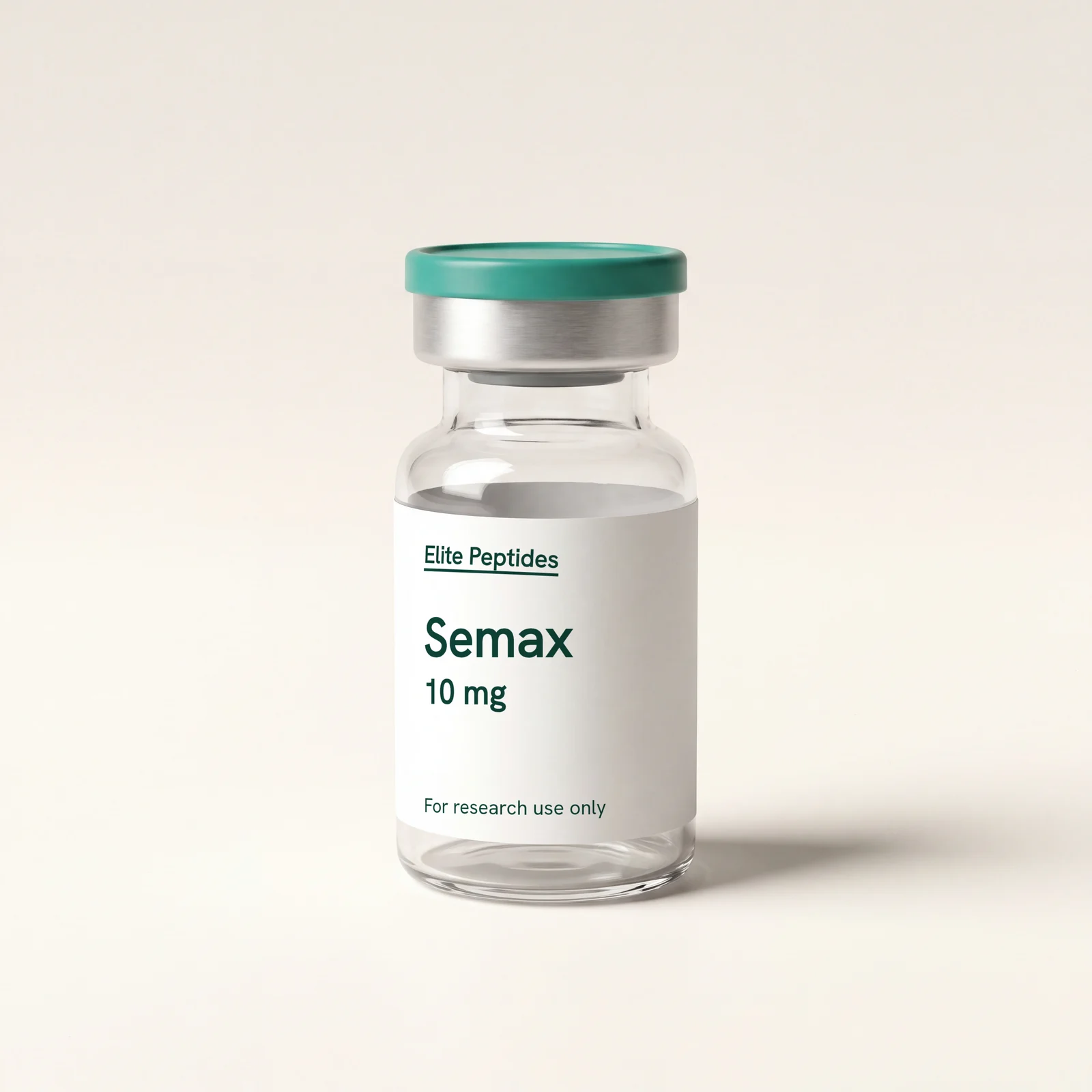
Semax in Australia. Semax is a synthetic heptapeptide — Met-Glu-His-Phe-Pro-Gly-Pro, a stabilised analogue of the ACTH(4-10) fragment — referenced across pro-cognitive, neurotrophic and neuropeptide research literature, and the leading pro-cognitive nootropic research peptide. This guide is a research-reference summary for Australian researchers; it makes no cognitive, nootropic, or human-use claim.
What Semax is
Semax derives from the ACTH(4-10) fragment, extended at the C-terminus with a Pro-Gly-Pro motif that stabilises the peptide against enzymatic degradation. That stabilising extension is what distinguishes it from the native fragment and gives it the in-vitro stability that makes it a practical research reference in the neurotrophic literature.
The BDNF / neurotrophic mechanism
Semax’s neurotrophic mechanism has been characterised in research models: Dolotov and colleagues (Brain Research, 2006) reported that it raises hippocampal BDNF (brain-derived neurotrophic factor) protein and exon-specific BDNF mRNA and increases trkB-receptor phosphorylation, implicating the BDNF/trkB signalling system. A companion study by Dolotov and colleagues (Journal of Neurochemistry, 2006) demonstrated specific, saturable binding together with a rapid rise in basal-forebrain BDNF — evidence for a receptor-mediated neurotrophic mechanism. These anchor Semax as a reference peptide for BDNF-pathway research.
Semax and Selank: the nootropic pair
Semax is most frequently studied alongside Selank — the two form the canonical “nootropic pair” in research literature, Semax framed as the pro-cognitive (BDNF / neurotrophic) partner and Selank as the anxiolytic / GABAergic partner. The Semax vs Selank comparison draws out the distinction, and the Selank guide covers the partner compound.
Identity, purity and handling
Every batch of Semax is independently HPLC-tested by Janoshik before it is listed, with the certificate published on the product page and in the lab-reports library — real batch number, measured percentage, independently verifiable at janoshik.com. Reconstitute with bacteriostatic water; store the powder at −20°C and, once reconstituted, at 2–8°C. Semax is not TGA-approved and is not a therapeutic good — supplied strictly for in-vitro and laboratory research use only, with no cognitive or human-use claim.
[ Frequently asked ]
Nootropic research — questions researchers ask.
- What is Semax?
- Semax is a synthetic heptapeptide — Met-Glu-His-Phe-Pro-Gly-Pro, a stabilised analogue of the ACTH(4-10) fragment — referenced across pro-cognitive, neurotrophic and neuropeptide research literature; the leading pro-cognitive nootropic research peptide. Elite AU Peptides supplies it strictly for in-vitro and laboratory research use only — not for human or animal consumption, not a therapeutic good, and not TGA-approved. No cognitive, nootropic, or human-use claim is made about it.
- What research is Semax associated with?
- Its neurotrophic mechanism has been characterised in research models: Dolotov and colleagues (Brain Research, 2006) reported that Semax raises hippocampal BDNF (brain-derived neurotrophic factor) protein and exon-specific BDNF mRNA and increases trkB-receptor phosphorylation. A companion study (Dolotov and colleagues, Journal of Neurochemistry, 2006) demonstrated specific, saturable binding together with a rapid rise in basal-forebrain BDNF — evidence for a receptor-mediated neurotrophic mechanism. It is studied in vitro as a research tool, not as a treatment.
- How does Semax pair with Selank?
- Semax and Selank are the canonical “nootropic pair” in research literature — Semax framed as the pro-cognitive (BDNF / neurotrophic) partner and Selank as the anxiolytic / GABAergic partner. They are most frequently referenced together; see the Selank guide or the Semax vs Selank comparison for the distinction.
- Is Semax TGA-approved in Australia?
- No. Semax is not TGA-approved and is not a therapeutic good. It is supplied strictly for in-vitro and laboratory research use only, with no medical, cognitive, or human-use claim.
- How is research-grade Semax tested?
- Every batch is independently HPLC-tested by Janoshik Analytical before it is listed. The measured purity is published on the product page and in the lab-reports library — real batch number, measured percentage, independently verifiable at janoshik.com; nothing is listed without a certificate on file.
- How is Semax reconstituted, stored and shipped?
- Reconstitute the lyophilised vial with bacteriostatic water — a 10mg vial in 5mL yields a 2mg/mL working stock. Store the powder at −20°C protected from light; once reconstituted, refrigerate at 2–8°C. Dispatched AU-domestic, free shipping over $100, same-day dispatch before 12pm AEST. Supplied strictly for laboratory research use only.
[ Referenced in this guide ]
Shop the compounds
- Semax — 10mgThe research-grade vial this guide references — independently HPLC-tested, COA on file, AUD pricing.
- Selank — 10mgThe canonical anxiolytic partner to Semax in nootropic research.
- DSIP — 5mg / 10mgA neuromodulatory peptide in the same nootropic category.
Comparing suppliers? Peptide prices in Australia lists what every compound and vial size costs in AUD, read live from the catalogue, next to the batch certificate for each one.
[ Keep reading ]
More research guides
- Selank anxiolytic research guideThe GABAergic partner to Semax in the canonical nootropic pair.
- Semax vs Selank research comparisonPro-cognitive versus anxiolytic — how the nootropic pair differs.
- DSIP delta-sleep research guideAn adjacent neuromodulatory research peptide.
- Nootropic & Cognitive research peptidesThe catalogue category Semax is filed under.
- All research guidesBrowse every research-use guide in the library.
Elite AU Peptides supplies research peptides and related compounds for laboratory and in-vitro research use only. Products are not therapeutic goods, are not TGA-approved, and are not for human or animal consumption. Nothing on this site constitutes medical advice or a therapeutic claim. Purchasers must be 18 years or older and are responsible for complying with all applicable laws in their jurisdiction.