[ GLP-1 / incretin research ]
Retatrutide vs tesamorelin: two different metabolic-research targets
A research-reference comparison of two GLP-class compounds we supply — retatrutide, studied as a triple GLP-1 / GIP / glucagon agonist, and tesamorelin, a GHRH-analogue — how their receptor targets differ. Receptor-research framing only; research use only.
7 min read · Updated 22 July 2026
[ Research use only · Not for human consumption ]
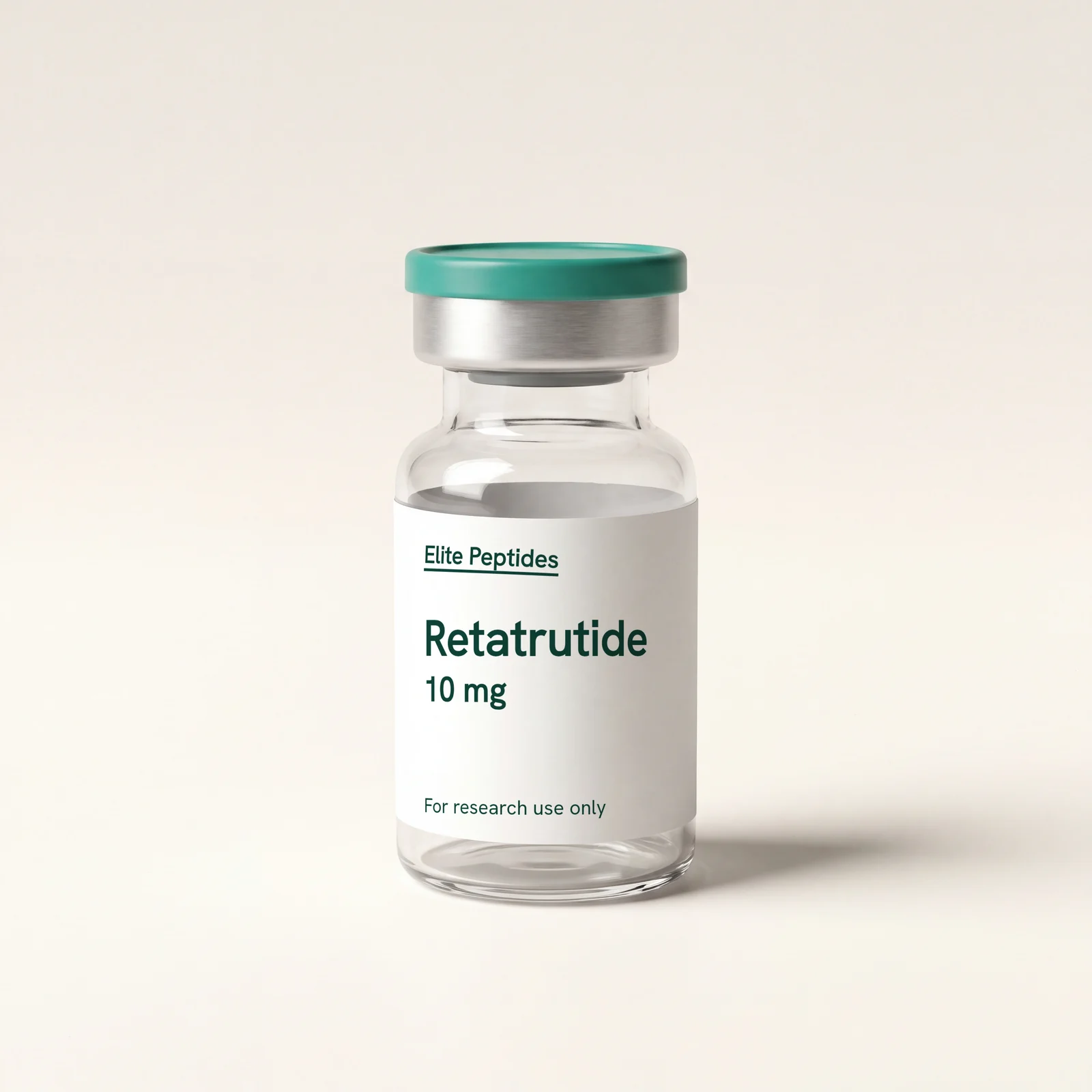
Retatrutide vs tesamorelin.Both are catalogued under GLP-class & metabolic research peptides, so researchers new to the space often want to know how they relate — but they target entirely different receptor systems. This guide is a research-reference comparison for Australian researchers, framed strictly around receptor pharmacology. It makes no medical, therapeutic, weight-loss, or body-composition claim.
Different receptors entirely
Retatrutide is studied as a triple agonist of the GLP-1, GIP and glucagon receptors — the incretin / glucagon family. Tesamorelin is a GHRH-analogue acting on the growth-hormone-releasing-hormone receptor. Despite sharing the “metabolic-research” category label, they target different pathways: incretin/glucagon signalling versus the somatotrophic (GHRH) axis.
What the research reports for each
Retatrutide’s triple-agonist receptor pharmacology was reported by Coskun and colleagues (Cell Metabolism, 2022) and its first-in-human pharmacokinetics by Urva and colleagues (The Lancet, 2022). Tesamorelin’s stabilising chemistry and GHRH-receptor pharmacology were characterised by Ferdinandi and colleagues (Basic & Clinical Pharmacology & Toxicology, 2007) and Stanley and colleagues (The Journal of Clinical Endocrinology & Metabolism, 2011). Elite AU Peptides cites these as published research findings only. The retatrutide and tesamorelin guides cover each in depth.
Same category, different targets
Both appear in the metabolic / growth-hormone-axis research literature and both are catalogued under GLP-class & metabolic research peptides, which is why they are compared — but the short answer is: same catalogue category, different receptor targets. The GLP-1 research peptides pillar sets out the wider incretin-research space.
Verification and compliance
Every batch of each compound is independently HPLC-tested by Janoshik before listing, with the certificate published in the lab-reports library. Neither is TGA-approved and neither is a therapeutic good; both are supplied strictly for in-vitro and laboratory research use only — not for human or animal consumption, with no medical, therapeutic, weight-loss, or body-composition claim. This comparison is a research-reference summary, not a recommendation for any use.
[ Frequently asked ]
GLP-1 / incretin research — questions researchers ask.
- What is the core difference between retatrutide and tesamorelin?
- They act on entirely different receptor systems. Retatrutide is studied as a triple agonist of the GLP-1, GIP and glucagon receptors (the incretin / glucagon family); tesamorelin is a GHRH-analogue acting on the growth-hormone-releasing-hormone receptor. Despite sharing the “metabolic-research” category, they target different pathways. This is a research-reference comparison, not a recommendation for any use.
- What research supports each compound?
- Retatrutide's triple-agonist receptor pharmacology was reported by Coskun and colleagues (Cell Metabolism, 2022) and its first-in-human PK by Urva and colleagues (The Lancet, 2022). Tesamorelin's stabilising chemistry and GHRH-receptor pharmacology were characterised by Ferdinandi and colleagues (Basic & Clinical Pharmacology & Toxicology, 2007) and Stanley and colleagues (JCEM, 2011). We cite these as published research findings only.
- Why compare them if they target different receptors?
- Both appear in the metabolic / growth-hormone-axis research literature and both are catalogued under GLP-class & metabolic research peptides, so researchers new to the space often want to know how they relate. The short answer: same catalogue category, different receptor targets — incretin/glucagon versus GHRH.
- Are retatrutide or tesamorelin TGA-approved?
- No. Neither is TGA-approved and neither is a therapeutic good. Both are supplied strictly for in-vitro and laboratory research use only — not for human or animal consumption, with no medical, therapeutic, weight-loss, or body-composition claim.
- How are they verified and shipped?
- Every batch of each compound is independently HPLC-tested by Janoshik Analytical before listing, with the certificate published in the lab-reports library. Dispatched AU-domestic; free shipping over $100; same-day dispatch before 12pm AEST. Supplied strictly for laboratory research use only.
[ Referenced in this guide ]
Shop the compounds
- Retatrutide — 10mg / 15mg / 20mg / 30mgThe triple-agonist half of the comparison — HPLC-tested, COA on file, AUD pricing.
- Tesamorelin — 10mg / 20mgThe GHRH-analogue half of the comparison.
Comparing suppliers? Peptide prices in Australia lists what every compound and vial size costs in AUD, read live from the catalogue, next to the batch certificate for each one.
[ Keep reading ]
More research guides
- Retatrutide research guideThe triple-agonist compound, in depth.
- Tesamorelin GHRH research guideThe GHRH-analogue compound, in depth.
- GLP-1 research peptides explainedThe incretin / metabolic-research pillar.
- GLP-class & Metabolic research peptidesThe catalogue category both compounds are filed under.
- All research guidesBrowse every research-use guide in the library.
Elite AU Peptides supplies research peptides and related compounds for laboratory and in-vitro research use only. Products are not therapeutic goods, are not TGA-approved, and are not for human or animal consumption. Nothing on this site constitutes medical advice or a therapeutic claim. Purchasers must be 18 years or older and are responsible for complying with all applicable laws in their jurisdiction.