[ GLP-1 / incretin research ]
GLP-1 research peptides explained: the incretin science and the compounds
A plain, research-framed explainer of the incretin system — the GLP-1, GIP and glucagon receptors — the approved medicines (Mounjaro, Ozempic, semaglutide, tirzepatide) the published literature is built on, and the research peptides Elite AU Peptides supplies for laboratory use. Cite-don't-endorse; research use only.
11 min read · Updated 22 July 2026
[ Research use only · Not for human consumption ]
GLP-1 research peptides explained. The terms driving so much search interest — Mounjaro, Ozempic, semaglutide, tirzepatide — all trace back to one piece of physiology: the incretin receptor system. This guide is a plain, research-framed explainer of that science and of the research peptides Elite AU Peptides supplies for laboratory work. It is written cite-don’t-endorse: approved medicines are referenced only as the subject of published research, never endorsed, and never offered as products. Our compounds are supplied for in-vitro / laboratory research use only, with no medical, therapeutic, weight-loss, or human-use claim.
The incretin system in one paragraph
The incretin system refers to gut hormones — principally GLP-1 (glucagon-like peptide-1) and GIP (glucose-dependent insulinotropic polypeptide) — that act on their own class-B G-protein-coupled receptors as part of glucose-dependent insulin signalling and energy-homeostasis physiology. A third, related receptor, the glucagon receptor, sits in the same family. These three receptors — GLP-1, GIP and glucagon — are the targets that “GLP-1 research peptides” are studied against. Understanding them is the whole point of this space: the compounds differ mainly in how many of these receptors they engage.
The approved medicines (what we do not sell)
Semaglutide (marketed as Ozempic and Wegovy) is an approved single-receptor GLP-1 agonist; tirzepatide (marketed as Mounjaro and Zepbound) is an approved dual GIP/GLP-1 agonist. These are approved prescription medicines that Elite AU Peptides does not supply — they are referenced here only as the subject of published research. Tirzepatide’s dual-agonist profile is documented across the SURPASS clinical-trial programme (for example, Frías and colleagues, New England Journal of Medicine, 2021). We cite this literature as research findings; nothing here is a recommendation, an endorsement, or an offer to supply an approved medicine.
The research compounds we do supply
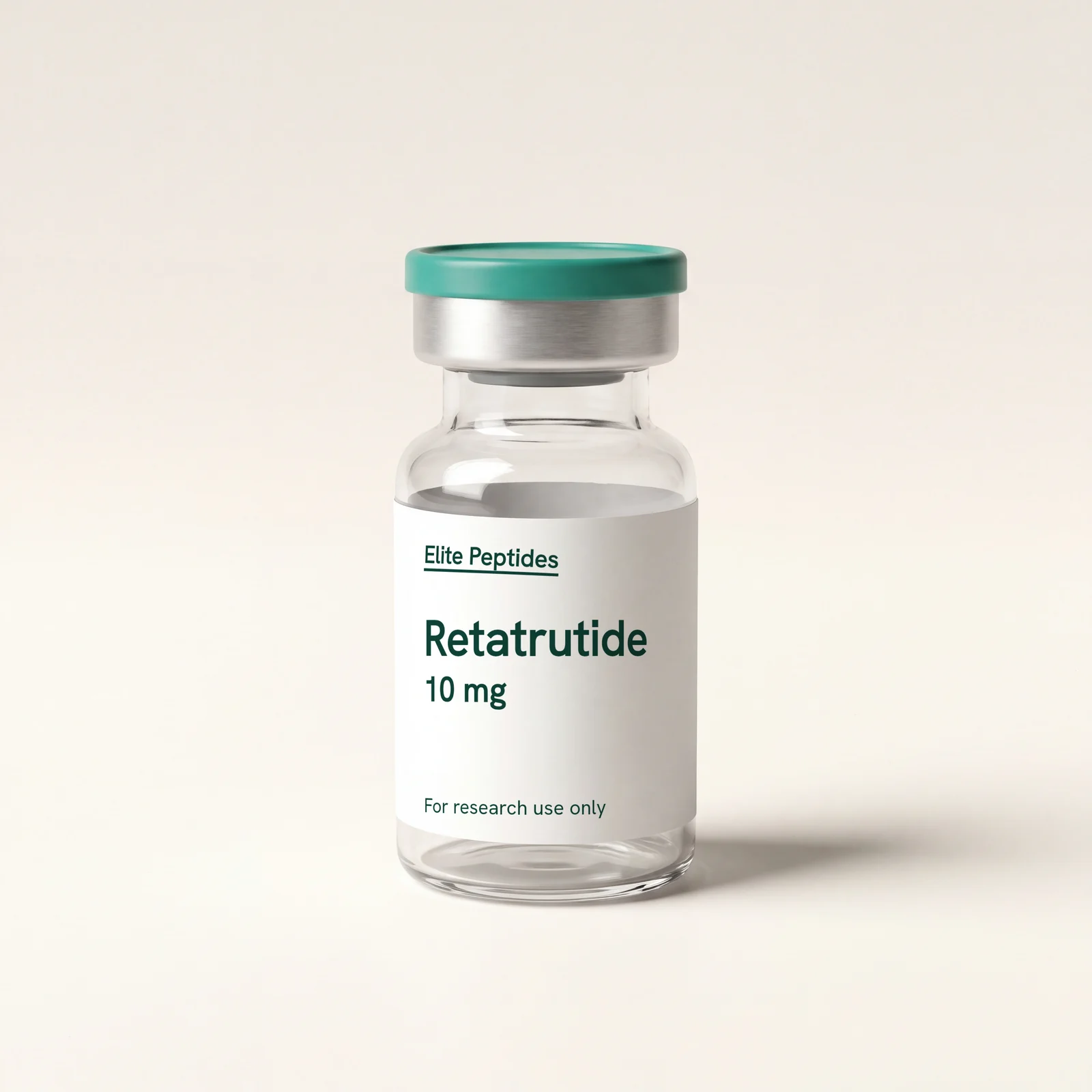
The research peptides in the GLP-class / metabolic category are studied against the same receptors. Retatrutide (LY3437943) is studied in published research as a single-peptide triple agonist of the GLP-1, GIP and glucagon receptors — its receptor pharmacology was reported by Coskun and colleagues (Cell Metabolism, 2022) and its first-in-human pharmacokinetics by Urva and colleagues (The Lancet, 2022). Tesamorelin is a stabilised GHRH-analogue studied in growth-hormone-axis research, and AOD-9604 is a synthetic growth-hormone-fragment studied in lipid-metabolism research. Each is supplied as a research-grade peptide for laboratory use only — not a medicine, and not a substitute for one.
How the compounds differ — receptor by receptor
The clearest way to hold the space in your head is by receptor count. Semaglutide engages one incretin receptor (GLP-1). Tirzepatide engages two (GLP-1 and GIP). Retatrutide is studied as engaging three (GLP-1, GIP and glucagon). That progression — one, two, three receptors — is the through-line of the published incretin-pharmacology literature, and it is the basis of the head-to-head research comparisons: the retatrutide vs tirzepatide and semaglutide vs retatrutide guides work through the mechanism in detail, and the Mounjaro vs Ozempic guide covers the two approved medicines factually.
Identity, purity and the COA moat
Every batch of the GLP-class research peptides supplied by Elite AU Peptides is independently HPLC-tested by Janoshik before it is listed. The measured purity is published on each product page and in the lab-reports library — a real batch number, the measured percentage, and an independently verifiable Janoshik report. For a research compound, verified identity and purity are the whole game; nothing is listed without a certificate on file. Browse the full GLP-class & metabolic research peptides category for the current catalogue.
Compliance and research-use framing
The research peptides referenced here are not TGA-approved, are not therapeutic goods, and are supplied strictly for in-vitro and laboratory research use only — not for human or animal consumption. Mounjaro, Ozempic, Wegovy, semaglutide and tirzepatide are approved medicines we do not supply, referenced only as published research. Elite AU Peptides makes no medical, therapeutic, weight-loss, or body-composition claim about any product, and makes no claim that any research peptide is a substitute for, or equivalent to, an approved medicine. Anything above is a research-reference summary of published literature, not medical advice; consult a qualified healthcare professional for any clinical question.
[ Frequently asked ]
GLP-1 / incretin research — questions researchers ask.
- What are GLP-1 research peptides?
- “GLP-1 research peptides” is a loose label for compounds studied around the incretin receptor system — the GLP-1 receptor, the GIP receptor and the glucagon receptor. Elite AU Peptides supplies research-grade retatrutide, tesamorelin and AOD-9604 for this space, strictly for in-vitro and laboratory research use only — not for human or animal consumption, not therapeutic goods, and not TGA-approved. We make no medical, therapeutic, weight-loss, or body-composition claim about any of them.
- Do you sell Mounjaro, Ozempic, semaglutide or tirzepatide?
- No. Mounjaro, Ozempic, Wegovy, semaglutide and tirzepatide are approved prescription medicines that we do not supply. They are referenced in these guides only as the subject of published research — cited as research findings, never endorsed, and never offered as products. The compounds we supply are research-grade peptides for laboratory use only.
- What is the incretin system?
- The incretin system refers to gut hormones — principally GLP-1 (glucagon-like peptide-1) and GIP (glucose-dependent insulinotropic polypeptide) — that act on their respective G-protein-coupled receptors as part of glucose-dependent insulin signalling and energy-homeostasis physiology. It is textbook endocrinology; the receptors are the targets that incretin-pathway research peptides are studied against.
- What is retatrutide studied as?
- Retatrutide (LY3437943) is studied in the published literature as a single-peptide triple agonist of the GLP-1, GIP and glucagon receptors — its receptor pharmacology was reported by Coskun and colleagues (Cell Metabolism, 2022) and its first-in-human pharmacokinetics by Urva and colleagues (The Lancet, 2022). We reference these as research findings only; our retatrutide is a research-grade peptide supplied for laboratory use, not a medicine.
- How is tirzepatide different from retatrutide?
- Tirzepatide is an approved dual agonist of the GLP-1 and GIP receptors (Frías and colleagues, New England Journal of Medicine, 2021). Retatrutide is studied as a triple agonist that adds glucagon-receptor activity on the same peptide backbone. This is a mechanistic distinction drawn from published research — not a recommendation to use one in place of the other. We supply retatrutide as a research peptide only; we do not supply tirzepatide.
- Are these research peptides TGA-approved or safe for human use?
- No. The research peptides we supply are not TGA-approved, are not therapeutic goods, and are supplied strictly for in-vitro and laboratory research use only — not for human or animal consumption. Anything in these guides is a research-reference summary of published literature, not medical advice; consult a qualified healthcare professional for any clinical question.
- How is purity verified?
- Every batch of the GLP-class research peptides is independently HPLC-tested by Janoshik Analytical before it is listed. The measured purity is published on each product page and in the lab-reports library — a real batch number, the measured percentage, and an independently verifiable Janoshik report; nothing is listed without a certificate on file.
[ Referenced in this guide ]
Shop the compounds
- Retatrutide — 10mg / 15mg / 20mg / 30mgThe research peptide studied as a GLP-1 / GIP / glucagon triple agonist — independently HPLC-tested, COA on file, AUD pricing.
- Tesamorelin — 10mg / 20mgA stabilised GHRH-analogue research peptide in the GLP-class / metabolic category.
- AOD-9604 — 5mgA synthetic growth-hormone-fragment research peptide studied in lipid-metabolism research.
Comparing suppliers? Peptide prices in Australia lists what every compound and vial size costs in AUD, read live from the catalogue, next to the batch certificate for each one.
[ Keep reading ]
More research guides
- Retatrutide vs tirzepatide research comparisonTriple agonist (studied) versus approved dual agonist — what the published research shows.
- Semaglutide vs retatrutide researchThe single-receptor approved medicine versus the triple-agonist research compound.
- Mounjaro vs Ozempic — what the research showsA factual, cite-don't-endorse look at the two approved medicines behind the demand.
- Research peptides in Australia — the complete guideThe top-level pillar: what research peptides are, how purity is verified, and how to source them.
- GLP-class & Metabolic research peptidesThe catalogue category the GLP-class research peptides are filed under.
- All research guidesBrowse every research-use guide in the library.
Elite AU Peptides supplies research peptides and related compounds for laboratory and in-vitro research use only. Products are not therapeutic goods, are not TGA-approved, and are not for human or animal consumption. Nothing on this site constitutes medical advice or a therapeutic claim. Purchasers must be 18 years or older and are responsible for complying with all applicable laws in their jurisdiction.