[ GLP-1 / incretin research ]
Retatrutide in Australia: a triple-agonist research guide
What retatrutide is — a synthetic peptide studied in published research as a single-peptide triple agonist of the GLP-1, GIP and glucagon receptors — where it sits in the incretin-pharmacology literature, and how research-grade material is HPLC-verified. Receptor-research framing only; research use only.
8 min read · Updated 22 July 2026
[ Research use only · Not for human consumption ]
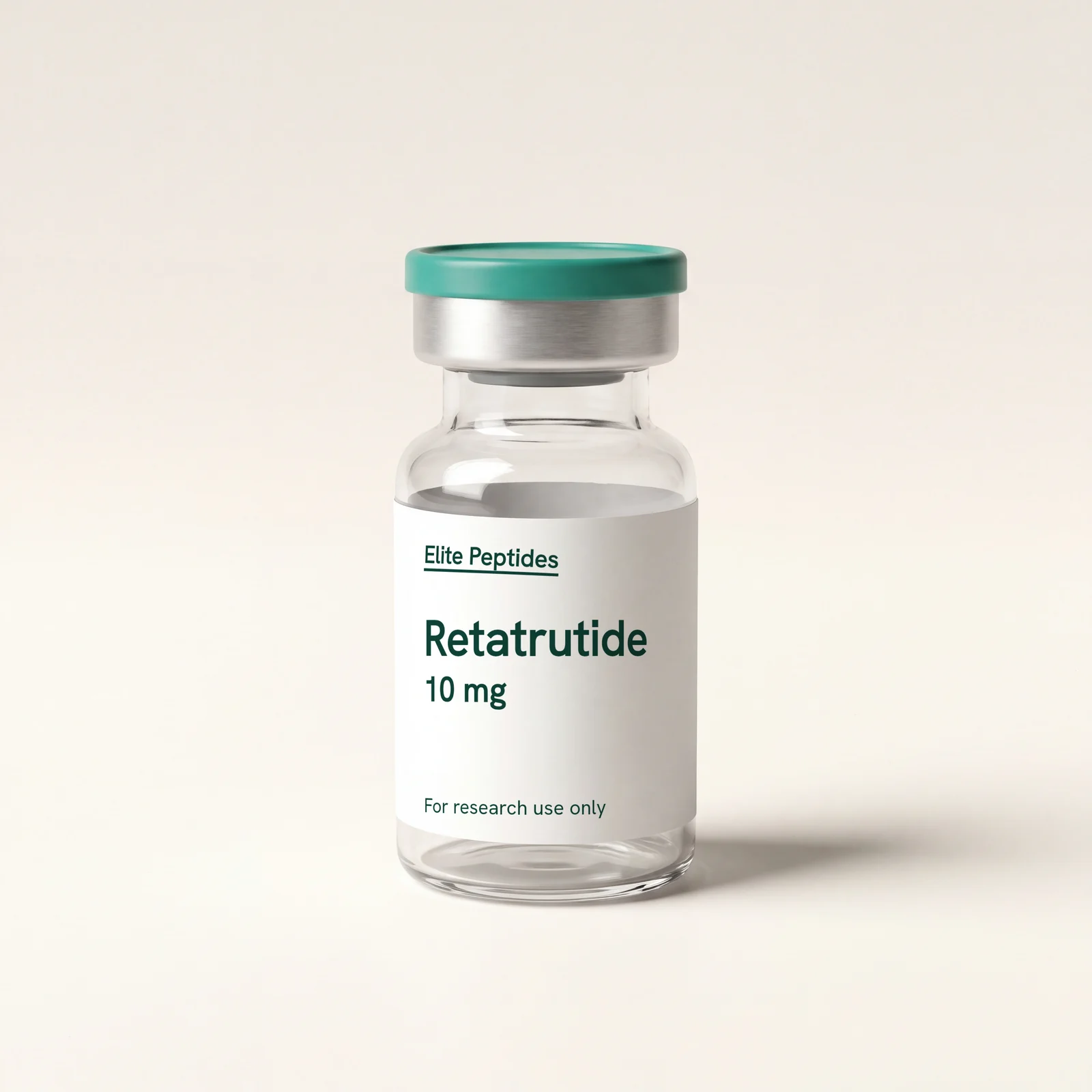
Retatrutide in Australia. Retatrutide (LY3437943) is a synthetic peptide studied in published research as a single-peptide triple agonist of the GLP-1, GIP and glucagon receptors — three class-B G-protein-coupled receptors whose signalling converges in metabolic and energy-homeostasis research. This guide is a research-reference summary for Australian researchers, framed strictly around receptor pharmacology. It makes no medical, therapeutic, weight-loss, or body-composition claim.
The triple-agonist receptor profile
Retatrutide is a 39-residue synthetic peptide whose backbone carries non-standard residues (aminoisobutyric-acid substitutions and an α-methyl-leucine that resist enzymatic degradation) plus a C20 fatty-diacid conjugate that supports albumin binding. In receptor research it is characterised as a balanced triple agonist of the GLP-1, GIP and glucagon receptors — the addition of glucagon-receptor activity is what distinguishes it from dual incretin agonists in the literature.
What the published research reports
The discovery and receptor-pharmacology profile of this single-peptide triple agonist were reported by Coskun and colleagues (Cell Metabolism, 2022), who characterised its balanced glucagon- and GLP-1-receptor activity alongside greater GIP-receptor activity. The first-in-human pharmacokinetic work — the profile behind the extended half-life that supports once-weekly research dosing schedules — was reported by Urva and colleagues (The Lancet, 2022). Elite AU Peptides cites these as published research findings only; the material supplied here is a research-grade peptide, not a medicine.
Retatrutide in context
Retatrutide extends the multi-agonist concept beyond tirzepatide (an approved GLP-1 / GIP dual agonist) by adding glucagon-receptor activity on the same peptide backbone, which is why it is frequently compared with tirzepatide in receptor-pharmacology research — see the retatrutide vs tirzepatide comparison. Within the catalogue it sits alongside tesamorelin (a GHRH-analogue) — the retatrutide vs tesamorelin comparison and the GLP-1 research peptides pillar cover the wider incretin-research space.
Identity, purity and compliance
Retatrutide is stocked in 10mg, 15mg, 20mg and 30mg lyophilised vials, each batch independently HPLC-tested by Janoshik before listing, with the certificate published on the product page and in the lab-reports library. Retatrutide is an investigational compound in published research; the material here is not TGA-approved, is not a therapeutic good, and is supplied strictly for in-vitro and laboratory research use only — not for human or animal consumption. Elite AU Peptides makes no medical, therapeutic, weight-loss, or body-composition claim; anything above is a research-reference summary, not medical advice.
[ Frequently asked ]
GLP-1 / incretin research — questions researchers ask.
- What is retatrutide?
- Retatrutide (LY3437943) is a synthetic peptide studied in published research as a single-peptide triple agonist of the GLP-1, GIP and glucagon receptors — three class-B G-protein-coupled receptors in the incretin / glucagon family. Elite AU Peptides supplies it strictly for in-vitro and laboratory research use only — not for human or animal consumption, not a therapeutic good, and not TGA-approved. We make no medical, therapeutic, weight-loss, or body-composition claim about it.
- What research is retatrutide associated with?
- Its receptor pharmacology as a balanced triple agonist was reported by Coskun and colleagues (Cell Metabolism, 2022), who characterised its balanced glucagon- and GLP-1-receptor activity alongside greater GIP-receptor activity; its first-in-human pharmacokinetics were reported by Urva and colleagues (The Lancet, 2022). We cite these as published research findings only.
- How is retatrutide different from tirzepatide?
- Tirzepatide is an approved dual agonist of the GLP-1 and GIP receptors; retatrutide is studied as a triple agonist that adds glucagon-receptor activity on the same peptide backbone. That third receptor is the defining mechanistic distinction. See the retatrutide vs tirzepatide comparison — it is a research-reference comparison, not a substitute recommendation, and we do not supply tirzepatide.
- Why does retatrutide come in four strengths?
- Retatrutide is stocked in 10mg, 15mg, 20mg and 30mg lyophilised vials so researchers can select the vial that matches their protocol's working-concentration needs. Strengths are variant selections on the product page, not separate compounds.
- Is retatrutide TGA-approved or safe for human use?
- No. Retatrutide is an investigational compound in published research; the material supplied here is not TGA-approved, is not a therapeutic good, and is for in-vitro laboratory research use only — not for human or animal consumption. Anything here is a research-reference summary, not medical advice.
- How is research-grade retatrutide tested and shipped?
- Every batch is independently HPLC-tested by Janoshik Analytical before listing, with the certificate published on the product page and in the lab-reports library. Dispatched AU-domestic, free shipping over $100, same-day dispatch before 12pm AEST. Supplied strictly for laboratory research use only.
[ Referenced in this guide ]
Shop the compounds
- Retatrutide — 10mg / 15mg / 20mg / 30mgThe research-grade vial this guide references — independently HPLC-tested, COA on file, AUD pricing.
- Tesamorelin — 10mg / 20mgA GHRH-analogue research peptide in the same metabolic category.
- AOD-9604 — 5mgA growth-hormone-fragment research peptide in the same metabolic category.
Comparing suppliers? Peptide prices in Australia lists what every compound and vial size costs in AUD, read live from the catalogue, next to the batch certificate for each one.
[ Keep reading ]
More research guides
- GLP-1 research peptides explainedThe incretin-research pillar — the receptor science in full.
- Retatrutide vs tesamorelin research comparisonTriple incretin agonist versus GHRH analogue — two different metabolic-research targets.
- Retatrutide vs tirzepatide research comparisonThe triple-agonist research compound versus the approved dual agonist.
- GLP-class & Metabolic research peptidesThe catalogue category retatrutide is filed under.
- All research guidesBrowse every research-use guide in the library.
Elite AU Peptides supplies research peptides and related compounds for laboratory and in-vitro research use only. Products are not therapeutic goods, are not TGA-approved, and are not for human or animal consumption. Nothing on this site constitutes medical advice or a therapeutic claim. Purchasers must be 18 years or older and are responsible for complying with all applicable laws in their jurisdiction.