[ Research methodology ]
How to reconstitute research peptides: method + calculator
How to reconstitute a lyophilised research peptide with bacteriostatic water — the method, the concentration math, and an interactive calculator that reads off the working-stock concentration. A laboratory research reference for Australian researchers.
7 min read · Updated 22 July 2026
[ Research use only · Not for human consumption ]
How to reconstitute research peptides. Almost every research peptide ships as a lyophilised (freeze-dried) powder, and reconstitution — dissolving that powder into a liquid working stock — is the first step in nearly every protocol. This guide covers the method, the concentration math, and an interactive calculator that reads off your working-stock concentration. It is written for laboratory research handling only; it makes no human-use, dosing, or medical claim.
The method, step by step
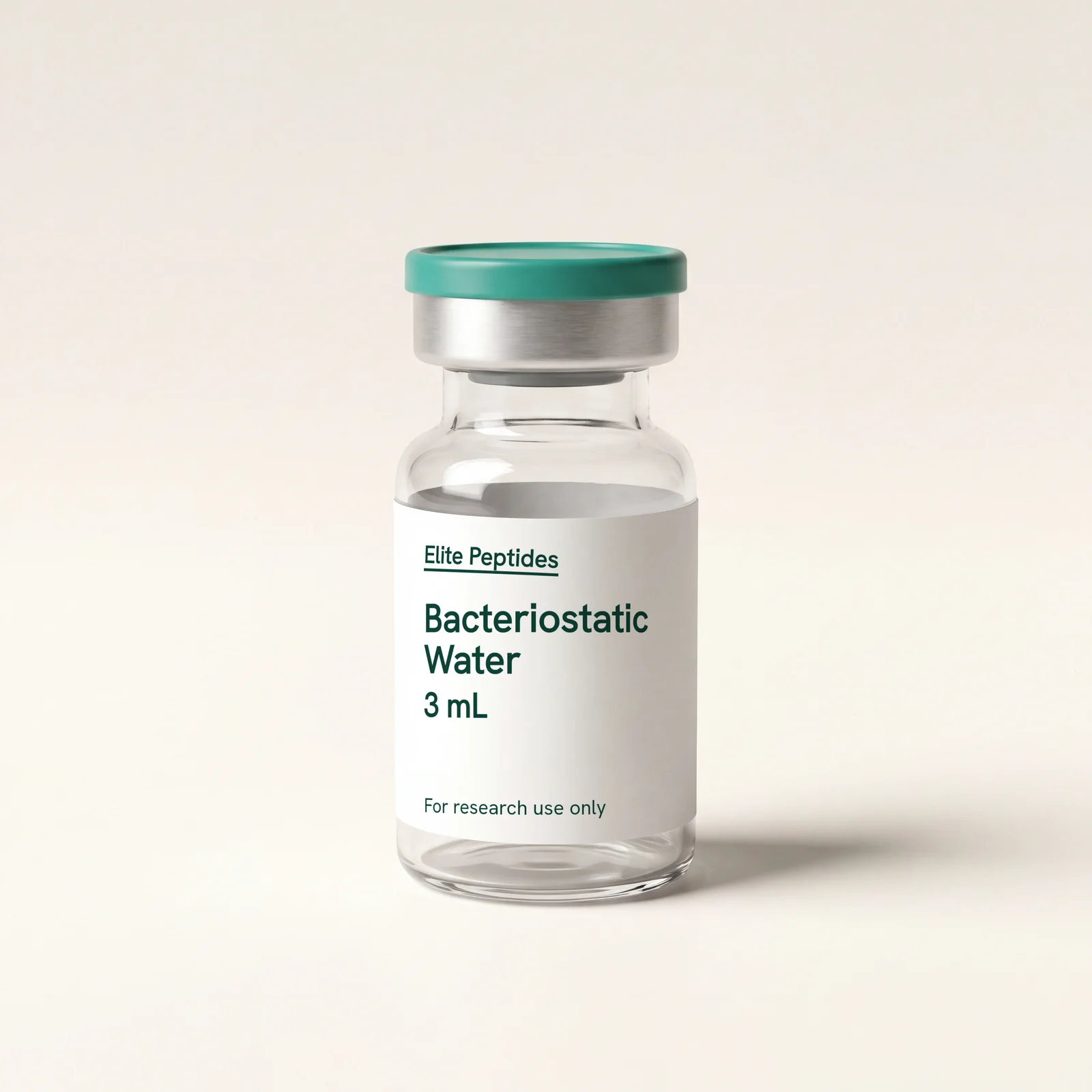
Reconstitute with bacteriostatic water — sterile water containing 0.9% benzyl alcohol as a preservative, the standard diluent across peptide-research methodology. Draw the required volume into a sterile transfer syringe using aseptic technique, then add it slowly down the inside wall of the lyophilised vial and swirl gently. Do not shake: shaking shears and can denature the peptide. Let the powder dissolve fully before use. The volume of water you add sets the concentration — less water, more concentrated; more water, more dilute.
The concentration math
Working-stock concentration is simply the peptide mass divided by the diluent volume. A 10mg vial reconstituted in 2mL of bacteriostatic water yields a 5mg/mL (5,000mcg/mL) stock; the same vial in 5mL yields 2mg/mL. To find the volume of stock that contains a given amount of peptide, divide that amount by the concentration — from a 5mg/mL stock, 5mg of peptide is contained in exactly 1mL. The calculator below does this arithmetic for you, and it also has its own page: the standalone peptide reconstitution calculator adds catalogue vial presets and a quick-reference table of how much bacteriostatic water each vial size needs.
[ Interactive tool ]
Reconstitution concentration calculator
Enter the peptide mass in the vial and the volume of bacteriostatic water you are adding to read off the working-stock concentration. Optionally, enter a target amount to see the volume of stock that contains it. Laboratory working-stock math only.
[ Working-stock concentration ]
5 mg/mL
= 5000 mcg/mL
A laboratory reconstitution-concentration tool for preparing research working stocks. It is not a dosing calculator and gives no human-use guidance. Supplied for in-vitro / laboratory research use only.
Why bacteriostatic water
The benzyl-alcohol preservative in bacteriostatic water inhibits microbial growth, so the same vial can be referenced across a multi-step research protocol without immediate compromise — unlike single-use sterile water, which loses its sterility guarantee after first access. That multi-access window is why bacteriostatic water, not plain or sterile water, is the diluent named in the reconstitution section of every lyophilised compound in the catalogue. It is stocked in 3ml and 10ml vials in the research ancillaries category.
Storage and handling after reconstitution
Store the lyophilised powder at −20°C, desiccated and protected from light. Once reconstituted, keep the solution refrigerated at 2–8°C and use it within the documented research window; if a protocol needs longer storage, aliquot and freeze to avoid repeated freeze-thaw cycles. Some compounds have specific handling notes — NAD+ is light-sensitive, and reconstituted GHK-Cu runs a characteristic blue from its copper coordination. Record the concentration you prepared, and cross-reference the batch against its certificate — the how-to-read-a-COA guide covers that step.
Compliance and research-use framing
This guide and its calculator are laboratory reconstitution references for preparing research working stocks — not dosing tools, and they provide no human-use guidance. Elite AU Peptides supplies every compound strictly for in-vitro and laboratory research use only — not for human or animal consumption, not therapeutic goods, not TGA-approved. Consult primary peer-reviewed literature for protocol-specific reference values.
[ Frequently asked ]
Research methodology — questions researchers ask.
- How do you reconstitute a research peptide?
- Add bacteriostatic water slowly down the inside wall of the lyophilised vial and swirl gently rather than shaking — shaking can shear and denature the peptide. The volume of water you add sets the working-stock concentration: less water gives a more concentrated stock, more water a more dilute one. The material is supplied strictly for in-vitro and laboratory research use only.
- What does the reconstitution calculator do?
- It computes the working-stock concentration (mg/mL and mcg/mL) from the peptide mass in the vial and the volume of bacteriostatic water you add, and — optionally — the volume of that stock which contains a target amount of peptide. It is a laboratory reconstitution-concentration tool, not a dosing calculator, and provides no human-use guidance.
- How much bacteriostatic water should I add?
- There is no single answer — the right volume depends on the working concentration your research protocol calls for. A common convenience is to pick a round concentration (for example, reconstituting a 10mg vial in 2mL to get a 5mg/mL stock). Use the calculator on this page to test a few volumes and read off the resulting concentration.
- Why bacteriostatic water rather than sterile water?
- Bacteriostatic water contains 0.9% benzyl alcohol as a preservative, which inhibits microbial growth so the same vial can be referenced across a multi-step research protocol. Single-use sterile water loses its sterility guarantee after first access, which is why bacteriostatic water is the standard reconstitution diluent in peptide-research methodology.
- How should reconstituted peptides be stored?
- Store the lyophilised powder at −20°C. Once reconstituted, keep the solution refrigerated at 2–8°C and use it within the documented research window; aliquot and freeze if a protocol needs longer storage, to avoid repeated freeze-thaw cycles. Some peptides (for example NAD+) are light-sensitive and should be protected from light.
- Is this a dosing calculator?
- No. It is a reconstitution-concentration tool for preparing laboratory working stocks — it computes mg/mL concentration and the volume of stock containing a stated mass of peptide. It carries no dosing, injection, or human-use semantics. All products are supplied for in-vitro / laboratory research use only.
[ Referenced in this guide ]
Shop the compounds
- Bacteriostatic water — 3ml / 10mlThe standard reconstitution diluent this guide references — AU-domestic, AUD pricing.
- BPC-157 — 5mg / 10mgA lyophilised research peptide to reconstitute with bacteriostatic water.
- GHK-Cu — 50mg / 100mgA copper-peptide whose reconstituted solution runs characteristically blue.
Comparing suppliers? Peptide prices in Australia lists what every compound and vial size costs in AUD, read live from the catalogue, next to the batch certificate for each one.
[ Keep reading ]
More research guides
- Peptide reconstitution calculatorThe calculator on its own page, with catalogue vial presets and a bac water quick-reference table.
- How to read a peptide COAThe verification skill that pairs with correct reconstitution.
- Research peptides in Australia — the complete guideThe pillar: what research peptides are and how to source them.
- Research ancillariesThe catalogue category bacteriostatic water is filed under.
- All research guidesBrowse every research-use guide in the library.
Elite AU Peptides supplies research peptides and related compounds for laboratory and in-vitro research use only. Products are not therapeutic goods, are not TGA-approved, and are not for human or animal consumption. Nothing on this site constitutes medical advice or a therapeutic claim. Purchasers must be 18 years or older and are responsible for complying with all applicable laws in their jurisdiction.