[ Mitochondrial research ]
MOTS-c vs NAD+: two different mitochondrial-research tools
A research-reference comparison of two longevity-strand compounds — MOTS-c, a genome-encoded mitochondrial-derived peptide studied around AMPK signalling, and NAD+, a cellular cofactor studied around sirtuin-pathway research — how they differ. Research use only.
6 min read · Updated 22 July 2026
[ Research use only · Not for human consumption ]
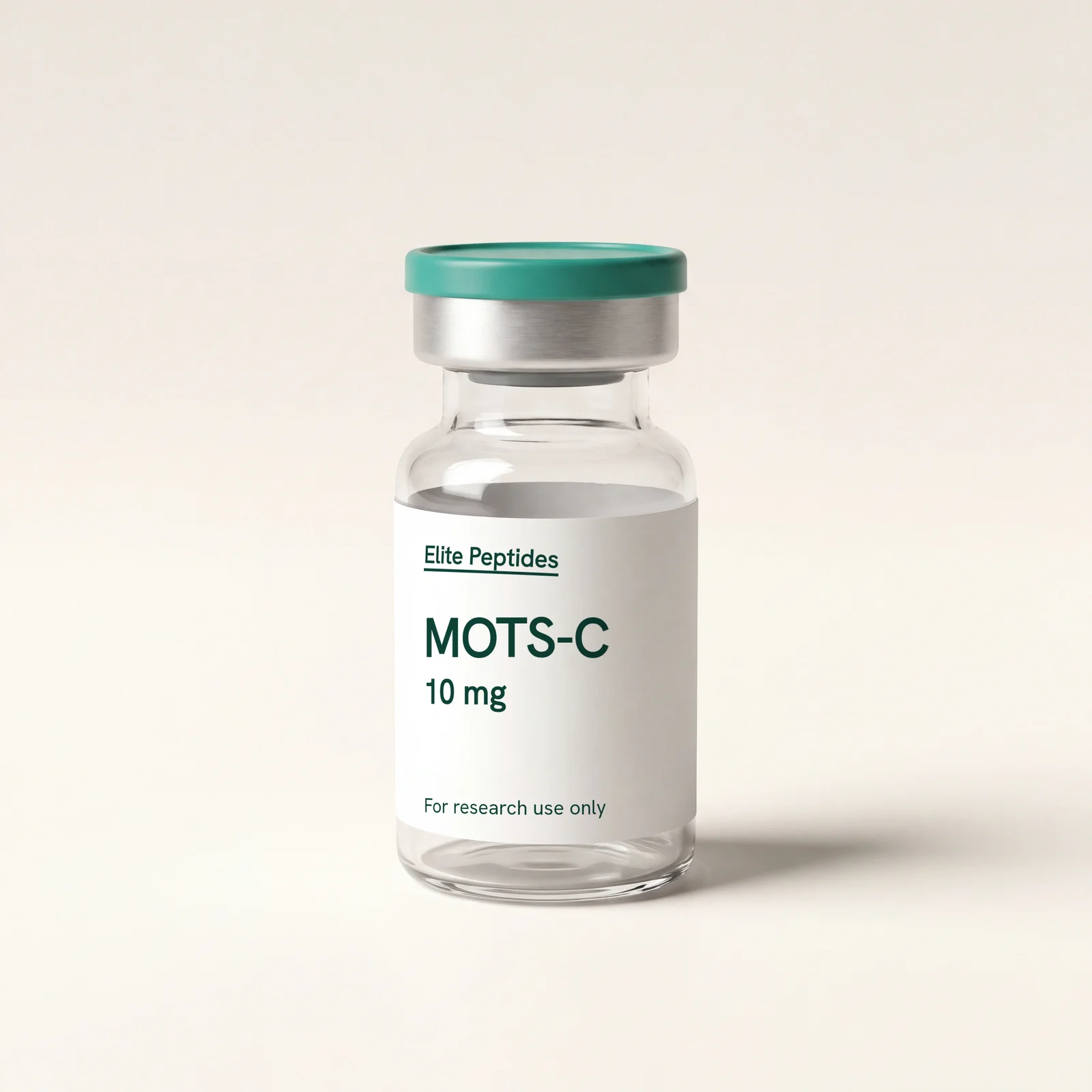
MOTS-c vs NAD+. Both sit in the longevity / mitochondrial research strand and are often researched together, but one is a peptide and the other a cofactor. This guide is a research-reference comparison for Australian researchers. It makes no anti-ageing, longevity-outcome, or human-use claim.
A peptide versus a cofactor
MOTS-c is a 16-residue mitochondrial-derived peptide encoded within the mitochondrial genome, studied around AMPK signalling. NAD+ is a cellular cofactor — a dinucleotide, not a peptide — studied around sirtuin-pathway research. That is the core distinction: a genome-encoded peptide versus a metabolic cofactor, interrogating mitochondrial biology by different routes.
What the research reports for each
MOTS-c was identified and characterised by Lee and colleagues (Cell Metabolism, 2015), with its exercise-responsive, nucleus-translocating behaviour reported by Reynolds and colleagues (Nature Communications, 2021). NAD+’s role in sirtuin and PARP activity and age-related decline is surveyed by Verdin (Science, 2015) and reviewed by Rajman and colleagues (Cell Metabolism, 2018). The MOTS-c and NAD+ guides cover each in depth.
Where they sit together
Both sit in the longevity category, frequently referenced alongside each other and SS-31 as complementary mitochondrial-research tools. Researchers compare them to contrast the mitochondrial-derived-peptide class with cofactor-availability research — two different angles on the same broad research question.
Verification and compliance
Every batch is independently HPLC-tested by Janoshik before listing, with the certificate published in the lab-reports library. Neither is TGA-approved and neither is a therapeutic good; both are supplied strictly for in-vitro and laboratory research use only, with no anti-ageing, longevity-outcome, or human-use claim. This comparison is a research-reference summary, not a recommendation for any use.
[ Frequently asked ]
Mitochondrial research — questions researchers ask.
- What is the core difference between MOTS-c and NAD+?
- MOTS-c is a 16-residue mitochondrial-derived peptide (encoded within the mitochondrial genome) studied around AMPK signalling; NAD+ is a cellular cofactor (a dinucleotide, not a peptide) studied around sirtuin-pathway research. One is a genome-encoded peptide, the other a metabolic cofactor — they interrogate mitochondrial biology by different routes. This is a research-reference comparison, not a recommendation for any use.
- What research supports each compound?
- MOTS-c was identified by Lee and colleagues (Cell Metabolism, 2015) and its exercise-responsive, nucleus-translocating behaviour reported by Reynolds and colleagues (Nature Communications, 2021). NAD+'s role in sirtuin and PARP activity and age-related decline is surveyed by Verdin (Science, 2015) and Rajman and colleagues (Cell Metabolism, 2018).
- Are they studied together?
- Yes — both sit in the mitochondrial / longevity research strand and are frequently referenced alongside each other (and SS-31) as complementary mitochondrial-research tools. They are compared to contrast the mitochondrial-derived-peptide class with cofactor-availability research.
- Are MOTS-c or NAD+ TGA-approved?
- No. Neither is TGA-approved and neither is a therapeutic good. Both are supplied strictly for in-vitro and laboratory research use only, with no anti-ageing, longevity-outcome, or human-use claim.
- How are they verified and shipped?
- Every batch is independently HPLC-tested by Janoshik Analytical before listing, with the certificate published in the lab-reports library. Dispatched AU-domestic; free shipping over $100; same-day dispatch before 12pm AEST. Supplied strictly for laboratory research use only.
[ Referenced in this guide ]
Shop the compounds
- MOTS-c — 10mg / 20mg / 40mgThe mitochondrial-derived peptide half of the comparison — HPLC-tested, COA on file.
- NAD+ — 100mg / 500mgThe cellular-cofactor half of the comparison.
Comparing suppliers? Peptide prices in Australia lists what every compound and vial size costs in AUD, read live from the catalogue, next to the batch certificate for each one.
[ Keep reading ]
More research guides
- MOTS-c mitochondrial research guideThe mitochondrial-derived peptide, in depth.
- NAD+ longevity research guideThe cellular cofactor, in depth.
- Longevity & Anti-aging research peptidesThe catalogue category both compounds are filed under.
- All research guidesBrowse every research-use guide in the library.
Elite AU Peptides supplies research peptides and related compounds for laboratory and in-vitro research use only. Products are not therapeutic goods, are not TGA-approved, and are not for human or animal consumption. Nothing on this site constitutes medical advice or a therapeutic claim. Purchasers must be 18 years or older and are responsible for complying with all applicable laws in their jurisdiction.